Stump Grinding vs Manual Removal: Which Method Fits Your Yard?
Understanding the Two Approaches
When a tree is cut down, the stump that remains can be an eyesore, a trip hazard, and a mower obstruction. Homeowners usually consider two main ways to deal with it: mechanical stump grinding or manual removal. Each method handles the stump roots and the surrounding soil differently, and the choice often comes down to your plans for the space, the size of the stump, and how much disturbance you are willing to accept in your yard.
Stump grinding uses a machine with a rotating cutting wheel to chip away the wood. The operator guides the grinder over the stump, reducing it to wood chips and mulch. The grinding depth typically reaches several inches below grade, which means the remaining wood sits lower than the surrounding soil. Manual removal, on the other hand, involves digging out the entire stump and root ball by hand or with a shovel, pickaxe, or small excavator. It is labor-intensive but leaves a clean hole where you can replant immediately.
How Stump Grinding Works
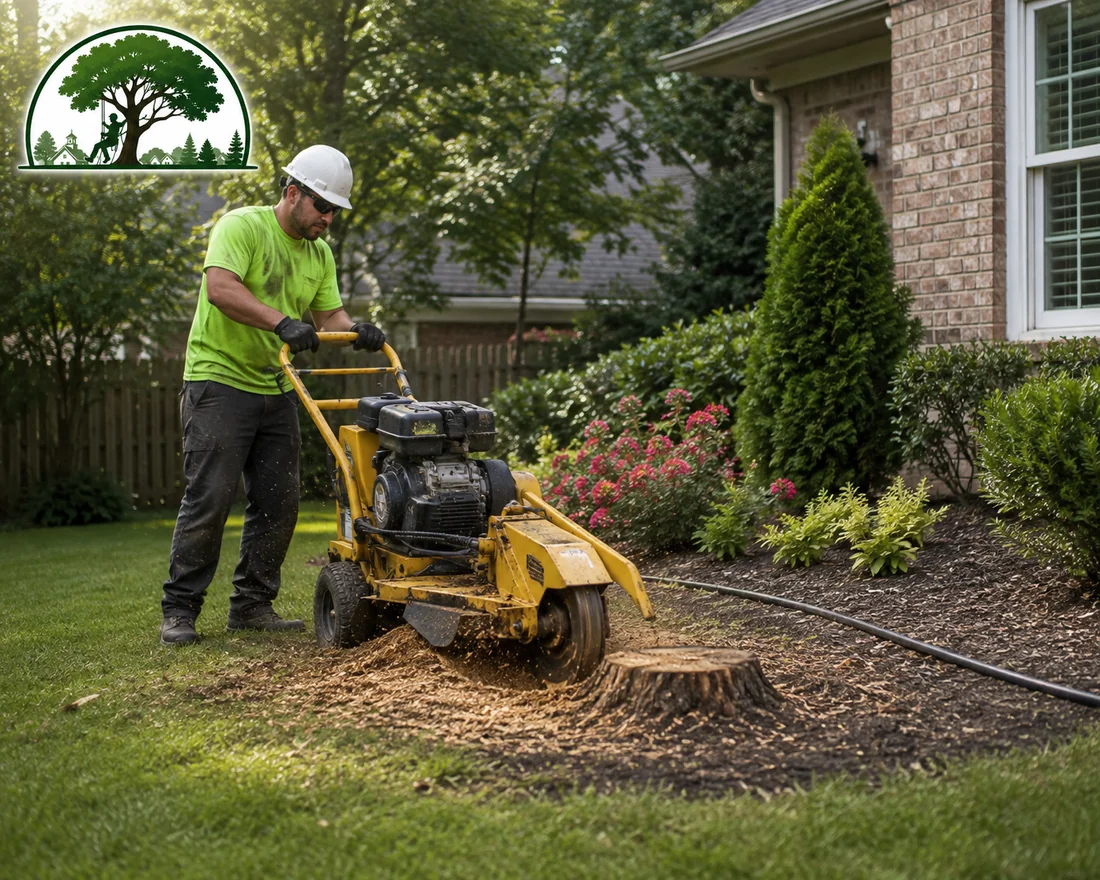
A stump grinder is a heavy, self-powered machine. Its cutting wheel has carbide teeth that spin at high speed and chew through wood. The operator moves the wheel across the stump in a controlled pattern, starting from the top and working down. As the grinder cuts, it produces a pile of wood chips and some soil. The operator can adjust the grinding depth to leave the stump well below the grass line, often 6 to 12 inches underground. This is what people mean by below grade stump grinding. The result is a cavity filled with the ground-up wood and dirt, which eventually settles and can be covered with topsoil or sod.
Because the machine does the heavy work, stump grinding is usually faster than manual removal. A single operator can finish a stump in minutes to an hour, depending on its size and the type of wood. The process also disturbs less of the yard. There is no large excavation, so nearby plants, lawn, and hardscaping are less likely to be damaged. The wood chips left behind can be used as mulch or hauled away if you prefer a cleaner finish.
How Manual Removal Works
Manual removal means digging out the stump and its roots. You start by cutting any visible roots around the base with a pruning saw or axe. Then you dig a trench around the stump, exposing the root ball. Large roots may need to be cut again as you go deeper. The goal is to loosen the stump enough to pull it free. This can be done with a shovel, a mattock, or even a winch or a small tractor for bigger stumps. Once the stump is out, you fill the hole back in with soil or compost.
This method gives you complete removal. There is no wood left underground to rot or attract pests. The hole is ready for new planting right away. But it is hard physical work. For a large stump, it can take several hours or even a full day. You also risk damaging underground utilities if you dig carelessly. The excavated area is a mess of dirt and roots, and you will need to dispose of the stump and roots yourself, which can be heavy and awkward.
Comparing the Two Methods
To decide which option suits your yard, think about your priorities. If you want the stump gone quickly and with minimal disruption to the surrounding area, below grade stump grinding is usually the better choice. The wood chips fill the hole, and the ground settles naturally over a few months. You can then seed or sod over the spot. The remaining wood below the surface will eventually decay, but it may take years. During that time, the soil may settle unevenly, creating a slight depression. That is normal and can be fixed with a bit of topsoil.
Manual removal is ideal if you plan to replant in the exact same spot soon. Because you remove the entire root ball, there is no barrier for new roots. It is also the only way to eliminate a stump that is sprouting new growth from the roots. Some tree species, like certain maples and willows, can send up shoots from leftover roots. Grinding does not stop that entirely, though it reduces the chance. Manual removal gets every bit of root, so the stump cannot regrow.
Another factor is the stump's location. If it sits close to a building, a fence, a driveway, or a utility line, manual removal may be risky. Digging could damage foundations or pipes. Stump grinding is more precise. The operator can control the depth and angle of the cut, and the machine stays on top of the stump, so it does not disturb the ground beyond a few feet. For stumps in tight spots, grinding is often safer.
Cost and Effort
Stump grinding is generally more expensive than renting or buying a grinder, but it saves a lot of physical effort. Manual removal costs little more than your time and some tools, but it demands serious labor. If you are not used to heavy digging, it can lead to back strain or injury. For large stumps, the effort may be impractical for one person.
Environmental Impact
Both methods have environmental considerations. Grinding leaves wood chips that can be used as mulch, which is a natural way to return organic matter to the soil. Manual removal creates a hole that you can fill with compost, but the stump itself must go somewhere - often to a landfill or a green waste facility. If you have a wood stove or a fireplace, you might season the stump and burn it, but that takes time and space.
When to Choose Below Grade Stump Grinding
Below grade stump grinding suits homeowners who want a quick, clean result and do not mind waiting for the soil to settle. It is the most common choice for yards where the stump is not in the way of new planting. It works well if you plan to reseed the area or lay sod. The wood chips help retain moisture and improve soil structure as they break down. If you are not in a hurry to replant, grinding is the least disruptive option.
For example, if you have a stump in the middle of a lawn and you just want to mow over the spot again, grinding is ideal. The machine leaves the area safe for foot traffic and mowers after a few weeks of settling. You may need to add topsoil later, but the process is straightforward.
When to Choose Manual Removal
Manual removal is better when you need the space for a new tree, a garden bed, or a hardscape feature like a patio or a walkway. Because it removes all the roots, there is no risk of future settlement or root regrowth. It is also the right choice if the stump is small enough that the effort feels reasonable. A stump under 12 inches in diameter can often be dug out in an afternoon with a good shovel and a bit of determination.
If you are working with a stump that has already sent up sprouts, manual removal might save you years of cutting back new shoots. It is a one-time solution that ends the problem for good.
Making Your Decision
There is no single right answer for every yard. The best method depends on your physical ability, your timeline, and your plans for the space. If you are unsure, consider the size of the stump and the type of tree it came from. Softwoods like pine grind up easily. Hardwoods like oak can be tough for a grinder but also tough for a shovel. For large hardwood stumps, grinding is almost always the practical choice.
Another consideration is the stump roots. Some trees have shallow, spreading roots that are easy to dig out. Others, like tap-rooted pines, go deep and are nearly impossible to remove by hand. Grinding can handle both because it cuts through wood regardless of root shape. Manual removal of a deep taproot may require heavy machinery, which defeats the purpose of a low-cost approach.
If you decide on grinding, make sure the operator understands the importance of grinding depth. A shallow grind leaves a stump that can still be a trip hazard or a mower obstruction. A proper below grade stump grinding job goes at least 6 inches under the surface, sometimes more for large stumps. That ensures the remaining wood is safely buried and will not cause problems.
Homeowners in the Dallas, Georgia area who are weighing these options often turn to a professional service for advice and execution. A company like Tree Service Dallas GA can assess the stump and recommend the most suitable method. Their experience with local soil types and tree species helps them provide practical guidance without overcomplicating the decision. Whether you choose grinding or manual removal, the goal is the same: a safe, attractive yard that works for your needs.
In the end, the choice is yours. If you value speed and minimal disruption, below grade stump grinding is the clear winner. If you want complete removal and are ready to work for it, manual removal can be very satisfying. Either way, you will have one less stump to worry about.